DPS
https://drive.google.com/folderview?id=0B_m-RG9r8hv9Ry1PUU5kVXM0cFU&usp=sharing
Contents
https://drive.google.com/folderview?id=0B_m-RG9r8hv9aFBXU0p0RzFiTlU&usp=sharing
Front Cover
https://drive.google.com/folderview?id=0B_m-RG9r8hv9ZUx3ZEh6enJmOVU&usp=sharing
Tuesday, 15 July 2014

Tuesday, 29 April 2014
Margin - The border of the page
Headline/subheading - bold title at the top of a page telling you about the article
Standfirst/kicker - an introductory paragraph in an article
Crosshead - A heading to a paragraph printed across a column in the body of a newspaper article
Pull out quote/Block quote - A select piece of text taken from the article
Byline - the author/editors
Main image/images - An image is a representation of the external form of a person or thing in art
Caption - A brief description of the image
Column/gutter - a column is how the text is set up and the gutter is how big the gap in between each column is
Copy - A posh word for text
Folio - an individual leaf of paper or parchment, either loose as one of a series of forming part of a bound volume, which is numbered on the recto or front side only.+-
Drop cap - A enlarged first initial that usually drops a few lines down
Headline/subheading - bold title at the top of a page telling you about the article
Standfirst/kicker - an introductory paragraph in an article
Crosshead - A heading to a paragraph printed across a column in the body of a newspaper article
Pull out quote/Block quote - A select piece of text taken from the article
Byline - the author/editors
Main image/images - An image is a representation of the external form of a person or thing in art
Caption - A brief description of the image
Column/gutter - a column is how the text is set up and the gutter is how big the gap in between each column is
Copy - A posh word for text
Folio - an individual leaf of paper or parchment, either loose as one of a series of forming part of a bound volume, which is numbered on the recto or front side only.+-
Drop cap - A enlarged first initial that usually drops a few lines down
Music magazine contents pages
Contents pages
1. Q magazine Oct 2012- Q magazines contents page is spread over 2 pages with multiple pictures over them. The colour scheme is followed through the contents page as it should and is made up of red, black and white. The main articles have photos enlarged above them and the page numbers are not in order of how they appear in the magazine but show where the more interesting articles are. There is also a small subscription box in the bottom right of the right hand page.
2. NME - NME's contents page has a completely different layout compared to Q. It is only a single page contents page and is full of colours. There is a large picture in the centre of the page along with 3 smaller images on the bottom of the large picture. There is a 'Band index' column down the left had side of the page with all the bands that are in the magazine and what page they are on. Down the left hand side there are 6 different sections with what is in that article. Like Q magazine, there is a subscription feature on the contents page.
3. Q magazine Oct 2001 - This Q magazines contents page is a different style compared to the newer 2012 version. It is only a single page spread and isn't as vibrant as the newer version. There are small pictures of different articles with page numbers on them referring to the which page that picture and article is on. The page numbers are ordered in 3 columns and are in order of page numbers. There are 2 pictures which look like badges which are on the top half of the page.
4. The Fly - Since this is a local music magazine it isn't as large as the bigger national magazines like Q and NME. This contents page is a single sided A5 piece of paper and is quite simple. The magazine's title is at the top right of the page and the article subheadings are below it along side the page numbers in white. The entire page is covered by a single photo of a band and the text overlays it. The editor also has a small piece of text at the bottom right of the page.
What information will I need for my contents page?
Looking at the different content pages I have seen these features that I would need in my contents page: A main interview, a second interview, an album review, a couple of photos of different articles and possibly any other ideas which I could think of. By doing this it will hopefully appeal to the reader.
Planning out content for the contents page
For my contents page I will have the features for my magazine laid out as such:
- Second interview
- Album review
- Top 10 chart list
- Main interview
- Gig guide for 2014
Thursday, 3 April 2014
Tuesday, 11 March 2014
Task 2 Photoshoot DPS Editing
Photo: https://drive.google.com/file/d/0B_m-RG9r8hv9a2M2LWc4Z1EyUUU/edit?usp=sharing
Monday, 10 March 2014
Thursday, 6 March 2014


Thursday, 27 February 2014
To consider a ramge of ways a DPS article can introduce an act and the effect the text could have on the reader and to also decide what style, tone and approach you may take as a writer for my own.
Monday, 24 February 2014
To plan photoshoot for my double page spread by researching images and evaluating the last photoshoot for the front cover
1. How could I have taken better photos for your front cover?

2. Which made up act will feature in your double page spread?
I will use 'The Yesterday' in my double page spread because I have already started to make an article about them so it would be wrong not to use them.
3. Who will model and why?
Clive, Myself, Matt. I will use them as they have already featured on the front cover as 'The Yesterday' so therefore I would use them again
4. Which settings in Brighton could you use and why?
I could use the following locations around Brighton:


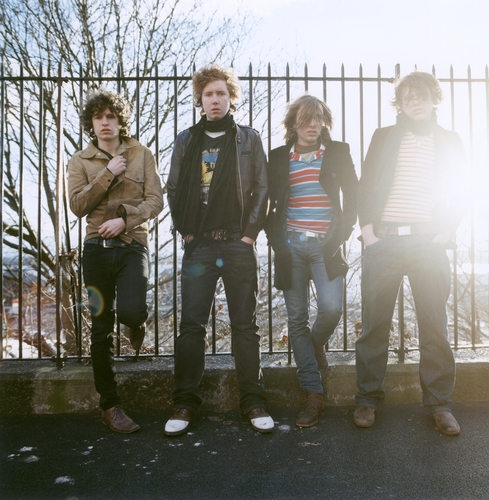
The Kooks (http://www.fanpop.com/clubs/the-kooks/images/1680276/title/kooks-photo)
- I could have made the photo better by having a close up image of the models.
- I could have planned to and applied more focus to the style of lighting used whilst taking photos of these models - I could have thought about moving the models into the light a bit more, experimented by taking a range of photos with different light conditions outside. I could also do this by using or not using the flash on my camera.
- I need to think about how I could make it more obvious that they are in a band - maybe I could use my guitar as a prop
2. Which made up act will feature in your double page spread?
I will use 'The Yesterday' in my double page spread because I have already started to make an article about them so it would be wrong not to use them.
3. Who will model and why?
Clive, Myself, Matt. I will use them as they have already featured on the front cover as 'The Yesterday' so therefore I would use them again
4. Which settings in Brighton could you use and why?
I could use the following locations around Brighton:
- The Brighton Wheel
- Hove park
- Beach
- Brighton Pier
- Brighton promenade
Kings of Leon (www.deanchalkley.com)
The Kooks (http://www.fanpop.com/clubs/the-kooks/images/1680276/title/kooks-photo)
Wednesday, 12 February 2014
Unit 51 Task 2 – Digital Copyright & Permissions
Copyright and Digital Permissions
What I have learnt.
Finding Websites that allow me to use graphics
http://commons.wikimedia.org/wiki/File:Sky-View_ForestWander.JPG
I have used the website Wikimedia which allows me to browse through different categories of images which are free to use. This is the permission for the image.
You are free:
Under the following conditions:
http://www.freeimages.co.uk/galleries/sports/sportsgames/slides/baseballcap.htm
I found the website Freeimages which has different images that I can use. The terms of use are here:
What I have learnt.
- According to Jisc Digital media there is no such thing as electronic or digital copyright - it is a convenient term that people use to imply machine-readable form. It is not a legal or copyright term.
- Copyright is not the only rights issue that will affect digital images. Other rights issues may include: moral rights; issues of privacy and of children and adults appearing in photographs; trademarks; design rights; and obscenity and indecency.
- A copyright is a property right so it can be sold traded or given away so ownership over a copyright can be change owners multiple times.
- Copyright only applies when a design or any idea is created. If a design is thought but not created it isn't under any copyright and can be used by others for their own benefit.
- You must ask for the owners consent before using the image for business or advertising purposes.
- You are allowed to take images from the web and use them without the owners consent IF you are using it for educational purposes only.
- You are not permitted to manipulate any images that may offend or upset the owner and/or the subject in the image.
- Images must be original which means it can not be replicated from something that already exists
- Most digital content found on the internet is protected by copyright
- The copyright law in the UK is centred around a number of legalisation pieces, they are: case law, directives, treaties and conventions and interpretation.
- The copyright law first came into effect in the UK in 1989
- Copyright lasts 50-70 years after the death of the author.
Finding Websites that allow me to use graphics
http://commons.wikimedia.org/wiki/File:Sky-View_ForestWander.JPG

I have used the website Wikimedia which allows me to browse through different categories of images which are free to use. This is the permission for the image.
- to share – to copy, distribute and transmit the work
- to remix – to adapt the work
- attribution – You must attribute the work in the manner specified by the author or licensor (but not in any way that suggests that they endorse you or your use of the work).
- share alike – If you alter, transform, or build upon this work, you may distribute the resulting work only under the same or similar license to this one.
http://www.freeimages.co.uk/galleries/sports/sportsgames/slides/baseballcap.htm
I found the website Freeimages which has different images that I can use. The terms of use are here:
| Examples of Acceptable Use: (Publication) | Unacceptable Use: (Redistribution) |
| Selling prints of images with the required attribution. | Uploading images to a photo sharing or stock photo site |
| Including versions of the image in a presentation slideshow distributed via CD | Selling Images as digital downloads |
| Printing the images in a magazine and distributing that magazine to 10,000 people. | Giving them away at full resolution as a collection of images on a CD |
Tuesday, 11 February 2014
Consider what the purpose of a DPS is and the key features within them as an article
What is a DPS?
Looking in Q magazine
Analysing a DPS about Nirvana
What does the headline suggest about the story?
The headline "How Nevermind Changed Music Forever" suggests that Nirvana's album 'Nevermind' changed music forever. The headline explains the history of the build up to 'Nevermind' and how it eventually ended the band and the alternative rock scene.
What is the main message of this article?
Its about how the album gave Nirvana global success but was also the beginning of the end for them.
How does the first line try to interest you?
What % would you say of the article is quotes?
The writer of this article is Roy Wilkinson. Information on Roy is here http://en.wikipedia.org/wiki/Roy_Wilkinson
He has written for 3 different music magazines: Select, Sounds and Q. He also until November 2005 managed British Sea Power in which included his younger brothers Yan and Hamilton.
- Double page spread
- 2 facing pages of an article where the writing continues on from the left to the right hand side.
Looking in Q magazine
- "The Wild Bunch" - Mercury Rev talk about their new album
- "New York Doll" - Blondie talks about her best albums and the best songs on those albums
- "It's a music fan's album." Radiohead talk about new album
- "We just wanted to make a great rock 'n' roll record." - Primal Scream talk about how they created a rock and roll record
- "How Nevermind Changed Music Forever" - Nirvana talk about the bands past and how the album 'Nevermind' changed music.
Analysing a DPS about Nirvana
What does the headline suggest about the story?
The headline "How Nevermind Changed Music Forever" suggests that Nirvana's album 'Nevermind' changed music forever. The headline explains the history of the build up to 'Nevermind' and how it eventually ended the band and the alternative rock scene.
What is the main message of this article?
Its about how the album gave Nirvana global success but was also the beginning of the end for them.
How does the first line try to interest you?
What % would you say of the article is quotes?
The writer of this article is Roy Wilkinson. Information on Roy is here http://en.wikipedia.org/wiki/Roy_Wilkinson
He has written for 3 different music magazines: Select, Sounds and Q. He also until November 2005 managed British Sea Power in which included his younger brothers Yan and Hamilton.
Monday, 20 January 2014
Thursday, 16 January 2014
Pretty Litter Guest Speaker
During this guest speaking we had the Editor of Pretty Litter come in and talk to us about her magazine and what they do. I have made some bullet points on this:
1) Print costs - 5000 - £2000 goes to printers - Gemini Press
2) Distribution - Swat, charge £150 inc. VAT per 50 places, so £300 for 100 places
3) Website - £150 per year for domain name and template
- It is a high end production and they only produce 3 issues a year
- They report on different arts related topics
- Its run off purely love for what they do so they don't get paid
- The Editor owns the magazine ( this usually happens if they are a small local magazine)
- Have to be able to do more than one job
- Social media is really important to get the magazine recognised
- Takes her own photos most of the time
- A full 1 page advertisement costs £550
- It is a 64 page magazine, 5-6 of those pages are advertising
- The back page is the most expensive place to advertise as it costs around £1500
- Their target audience is 25-40 years old.
1) Print costs - 5000 - £2000 goes to printers - Gemini Press
2) Distribution - Swat, charge £150 inc. VAT per 50 places, so £300 for 100 places
3) Website - £150 per year for domain name and template
Tuesday, 14 January 2014
Subscribe to:
Posts (Atom)